Aluminum Fabrication vs. Steel Fabrication: What’s the Difference?
This is a subtitle for your new post
Aluminum and steel can both be cut, welded, shaped, and turned into custom gates, railings, screens, and other exterior features. But once those products are installed, the two materials behave very differently.
Steel is heavier and generally more rigid. Aluminum is lighter, naturally resistant to rust, and often easier to maintain outdoors. That does not mean one is always better than the other. The right choice depends on what you are building, where it will be installed, and what you need it to do. For homeowners and commercial property owners in Sarasota, climate is also part of the decision. Humidity, rain, irrigation, coastal air, and year-round sun can all affect how a fabricated metal product looks and performs over time.
Here is what you need to know before choosing between aluminum and steel fabrication.
What Is Aluminum Fabrication?
Aluminum fabrication is the process of turning raw aluminum into a finished product.
A fabricator may start with aluminum tubing, sheet, plate, or extruded profiles. From there, the material is measured, cut, formed, welded, assembled, finished, and installed according to the project’s design.
Common aluminum fabrication projects include:
- Driveway and pedestrian gates
- Exterior railings
- Equipment screens
- Privacy panels
- Mechanical enclosures
- Decorative architectural features
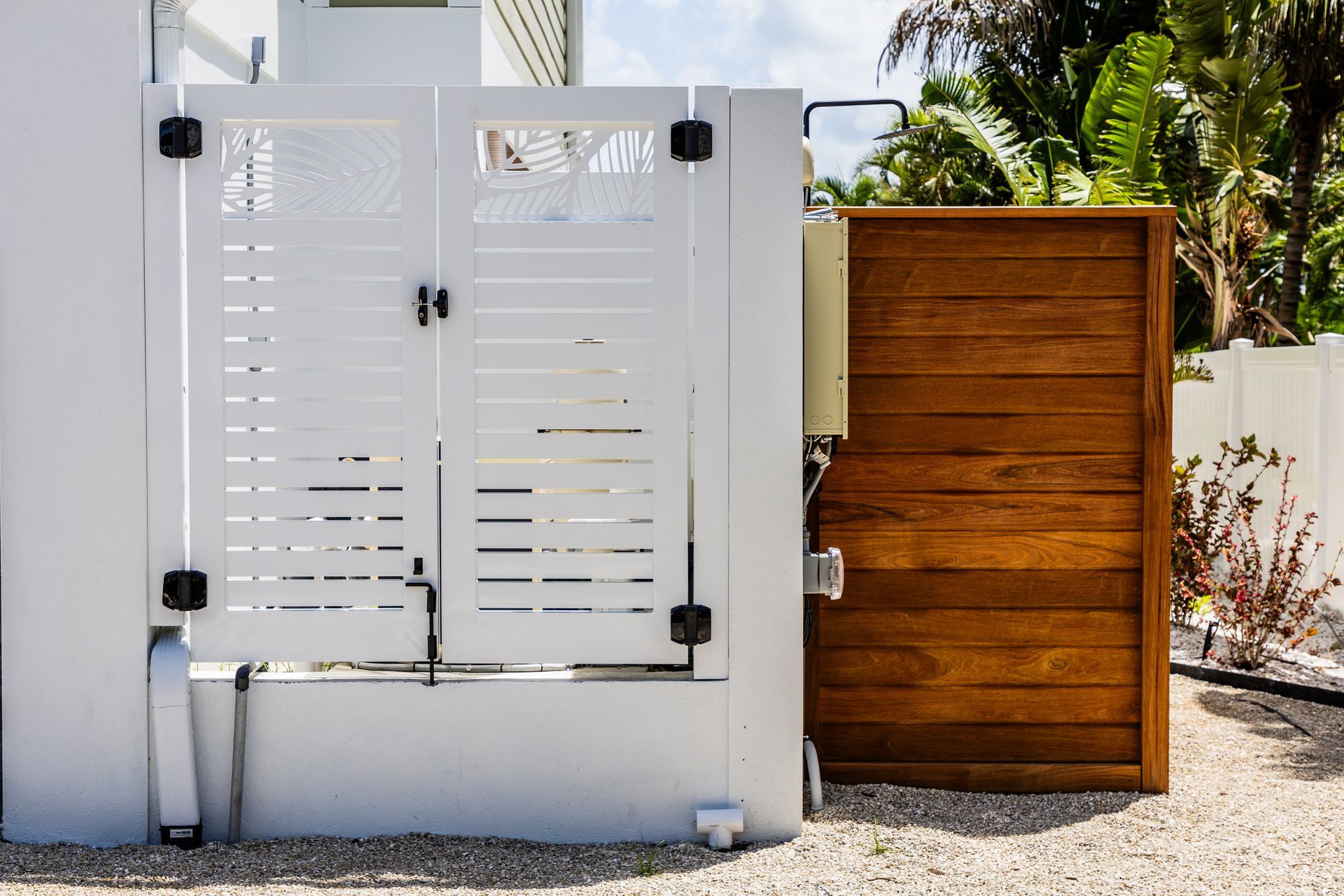
With custom aluminum fabrication, the finished product is built around the property rather than chosen from a standard catalog. That matters when a gate needs to fit between existing columns, a railing has to follow an unusual staircase, or an equipment screen must conceal machinery without blocking airflow or maintenance access.
The design can also account for the property’s style, preferred color, hardware, mounting conditions, and long-term use.
What Is Steel Fabrication?
Steel fabrication follows many of the same basic steps. Steel can also be cut, drilled, formed, welded, coated, and installed to create custom products. However, “steel” is a broad term.
A steel project may use:
- Carbon steel
- Galvanized steel
- Stainless steel
- Structural steel
- Steel tubing
- Sheet steel
- Steel plate
These materials do not all perform the same way.
Carbon steel, for example, can rust when it is exposed to moisture without adequate protection. Galvanized steel has a protective zinc coating, while stainless steel is made with alloying elements that improve corrosion resistance.
Because of this, aluminum should not be compared with “steel” as though every type of steel has the same strength, price, finish, or maintenance requirements.
The actual grade, coating, and intended use all matter.
Steel Is Stronger, but That Is Not the Whole Story
Steel is generally stronger and more rigid than aluminum. That is one of the main reasons it is used in structural framing, industrial applications, and projects that must carry heavy loads. But strength is not the only thing that matters.
A heavier material can create additional demands on:
- Hinges
- Support posts
- Foundations
- Rollers
- Gate operators
- Mounting surfaces
- Installation equipment
This is especially important with large gates. A very heavy gate may need larger posts, stronger hinges, more substantial foundations, and a more powerful operator. A lighter aluminum frame can reduce some of that load while still being designed to suit the gate’s size and use. Aluminum components can also be strengthened through design.
A fabricator may use:
- Larger profiles
- Thicker walls
- Added bracing
- Internal reinforcement
- Different frame layouts
- Closer support spacing
This is why two products made from the same material may perform very differently.
A poorly designed steel gate can still sag or fail. A properly designed aluminum gate can remain stable and functional for years.
The better question is not simply whether aluminum or steel is stronger. It is whether the complete design is suitable for the project.
Aluminum and Steel Handle Corrosion Differently
One of the clearest differences between aluminum and carbon steel is how they react to outdoor exposure. Aluminum naturally forms a thin oxide layer when it comes into contact with air. This layer helps protect the material beneath it. Aluminum does not develop the red-brown rust commonly seen on untreated carbon steel.
That does not mean aluminum is completely maintenance-free. Its finish can still be scratched or damaged, and some conditions can lead to other forms of corrosion.
Still, aluminum is often chosen for outdoor projects because it does not rely entirely on paint or coating to prevent rust.
Carbon steel normally needs some type of protection, such as:
- Primer and paint
- Powder coating
- Galvanizing
- A specialized coating system
If that protective layer is scratched and moisture reaches the bare steel, rust can begin to form.
Galvanized steel and stainless steel offer better resistance than untreated carbon steel, but they have their own fabrication requirements, appearance, and cost. When comparing quotes, it is important to ask exactly what type of metal and finish are being proposed. “Steel gate” or “metal railing” is not specific enough.
Why Sarasota’s Climate Matters
Outdoor metalwork in Sarasota is exposed to more than occasional rain.
Humidity, strong sunlight, irrigation, pool chemicals, coastal air, and frequent storms can all affect the material, finish, hardware, and fasteners. For this reason, aluminum is often a practical choice for exterior architectural projects in the area.
It can reduce concerns related to:
- Rust
- Repainting
- Heavy component weight
- Moisture exposure
- Salt in the air
- Irrigation overspray
That does not mean every aluminum product will automatically last. The finish, hardware, fasteners, drainage, weld quality, and installation still matter. A poorly designed project will not become durable simply because aluminum was used.
For gates, railings, and equipment screens, the entire system should be designed for the property and the way the product will be used.
How the Fabrication Process Differs
Aluminum and steel often go through similar fabrication stages, but they do not behave the same way in the shop.
A typical project may involve:
- Measuring the site
- Creating the design
- Selecting the material
- Cutting and shaping the profiles
- Welding and assembly
- Preparing the surface
- Applying the finish
- Installing the finished product
Aluminum requires specific welding techniques and careful heat control. It conducts heat quickly, which can make distortion and weld quality more difficult to manage without the right experience.
The fabricator also needs to select the proper profile size and wall thickness for the project.
For example, a large gate must remain stable while opening and closing. A railing must be properly supported and anchored. An equipment screen needs enough rigidity to withstand outdoor exposure without blocking airflow or access.
Understanding the aluminum fabrication process can make it easier to see why measurements, design, welding, finishing, and installation all affect the final result.
Which Material Requires More Maintenance?
Aluminum usually requires less rust-related maintenance than carbon steel, but neither material should be ignored after installation. Aluminum products may need occasional cleaning to remove dirt, salt, and debris. Powder-coated surfaces should also be checked for scratches or damage. Steel may need more frequent inspection for rust, peeling paint, coating failure, or exposed metal.
For both materials, moving parts often require more attention than the frame itself.
A gate may need regular maintenance for:
- Hinges
- Rollers
- Locks
- Latches
- Gate operators
- Access control components
Railings and equipment screens should also be checked for loose fasteners, damaged finishes, or movement at connection points.
Calling any exterior product “maintenance-free” is usually unrealistic. A better description is low maintenance.
Is Aluminum More Expensive Than Steel?
Sometimes aluminum costs more as a raw material. In other cases, steel may become more expensive once weight, finishing, transportation, installation, and maintenance are included. There is no simple answer because fabrication pricing depends on the complete project.
A quote may be affected by:
- Material type
- Profile size
- Wall thickness
- Amount of metal needed
- Design complexity
- Number of welds
- Decorative elements
- Powder coating or paint
- Hardware
- Site access
- Delivery
- Installation
- Foundations and support posts
- Gate automation preparation
Steel may have a lower material price, but its added weight can increase handling and installation requirements.
Aluminum may cost more upfront in some projects, but its lighter weight and reduced rust-related maintenance may provide better value over time. Material selection is only one of the factors that affect custom aluminum fabrication costs. Dimensions, design, hardware, finish, and site conditions can have just as much influence on the final price.
Aluminum vs. Steel for Custom Gates
Both aluminum and steel can be used for custom gates, but weight plays a major role in how a gate performs.
A gate is not a fixed wall. It moves repeatedly, often every day.
The frame must be supported by hinges, posts, rollers, tracks, or an operator. The heavier the gate, the more demand it may place on those components. This is one reason aluminum is commonly used for:
- Driveway gates
- Pedestrian gates
- Courtyard gates
- Sliding gates
- Swing gates
- Decorative gates
- Automated gates
- Privacy gates
A well-designed aluminum gate can be reinforced where needed while keeping the overall frame lighter than a comparable steel gate. That can be beneficial for large openings and automated systems.
Steel may still be the better choice for certain industrial, security, or impact-resistant applications. However, for many residential and commercial properties, custom aluminum gates offer a practical combination of lower weight, custom design, corrosion resistance, and finish options.
The final design should still take wind, opening width, hardware, automation, and support conditions into account.
Aluminum vs. Steel for Railings
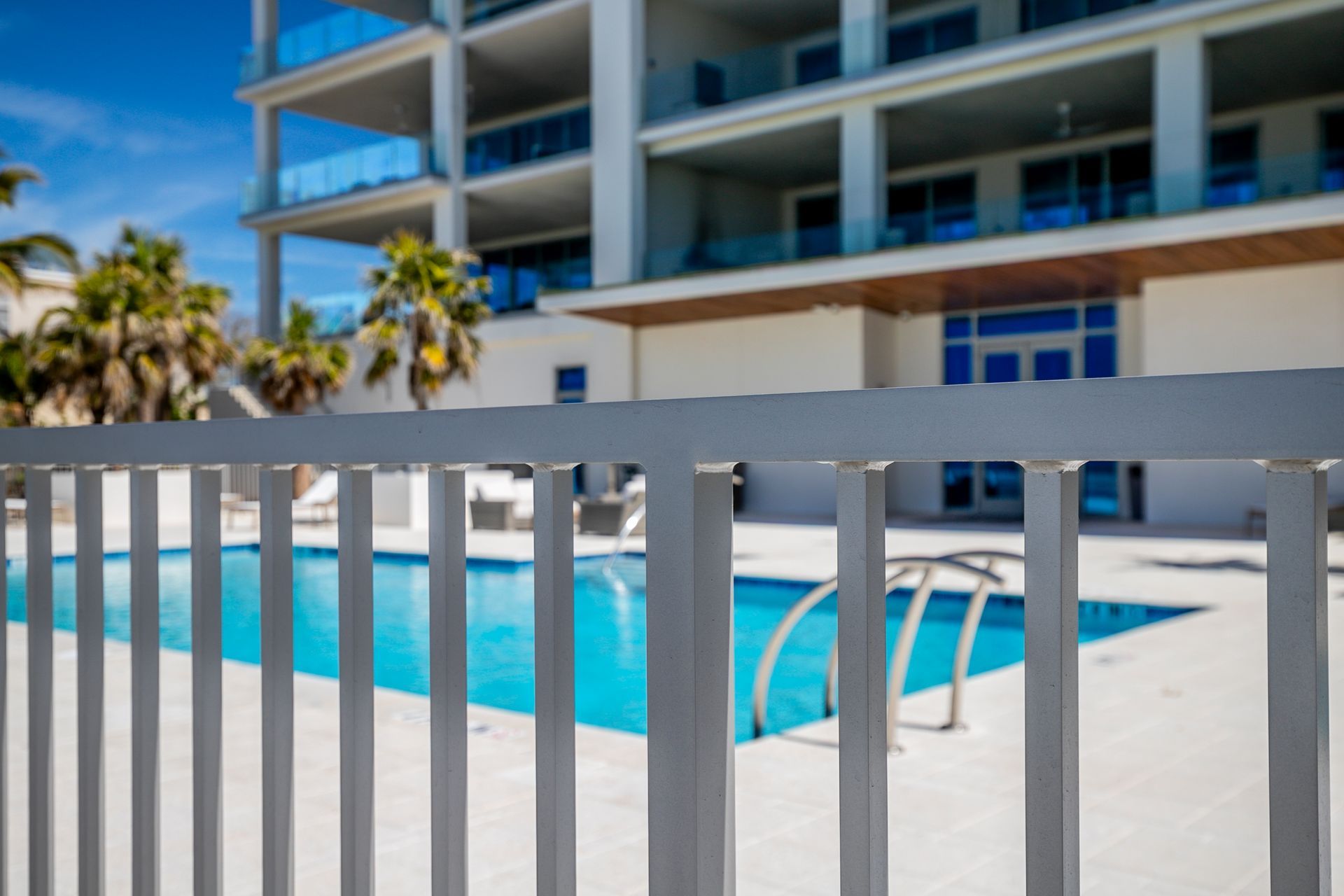
Railings need to do more than look good. They must be designed around the space, mounting surface, height, spacing, and intended use. Aluminum is often used for exterior railings because it provides a clean appearance without the same rust concerns associated with carbon steel.
It can also be powder-coated to match the surrounding property.
Custom aluminum railings may be used for:
- Stairs
- Balconies
- Porches
- Decks
- Walkways
- Commercial buildings
- Outdoor amenity areas
However, material choice alone does not determine whether a railing is suitable. Post spacing, profile size, anchors, connections, and installation are all part of the system. Any applicable safety, engineering, or building requirements must be considered for the actual project.
Aluminum vs. Steel for Equipment Screens
Equipment screens are often used to hide mechanical systems without interfering with how the equipment operates.
They may conceal:
- HVAC units
- Pool equipment
- Generators
- Utility equipment
- Rooftop systems
- Commercial mechanical areas
Unlike a solid wall, an equipment screen may need to allow airflow, provide maintenance access, and leave enough clearance around the machinery.
Aluminum works well for many of these projects because it can be fabricated into large panels without adding unnecessary weight. Its corrosion resistance can also be useful around pool equipment, irrigation, and other areas where moisture is common.
Custom aluminum equipment screens can be designed around the equipment’s actual size, required clearances, access points, and ventilation needs. This is usually more effective than trying to force a standard screen into a space it was not designed for.
When Steel May Be the Better Choice
Steel may be more appropriate when a project requires:
- Heavy structural support
- Maximum rigidity
- Large structural spans
- Concentrated loads
- Industrial impact resistance
- Specialized security performance
- A specific steel grade required by the plans
Steel remains an important material for structural and heavy-duty work.
A responsible fabricator should not recommend aluminum when the project’s requirements clearly call for steel.
When Aluminum May Be the Better Choice
Aluminum may be a better fit when the project benefits from:
- Lower weight
- Resistance to rust
- Reduced exterior maintenance
- Powder-coated finishes
- Large custom panels
- Easier handling
- Architectural styling
- Coastal or humid exposure
It is especially practical for many custom gates, railings, screens, privacy panels, and other nonstructural exterior features.
The final decision should still be based on the product’s size, use, location, and design.
Questions to Ask Before Hiring a Fabricator
The quality of the final product depends on more than the metal itself. Before approving a quote, ask about:
- Experience with similar projects
- Site measurements
- Material type and thickness
- Profile dimensions
- Welding procedures
- Surface preparation
- Finish
- Hardware
- Installation
- Warranty
- Quote exclusions
You can also review these questions to ask an aluminum fabrication company before making a decision. A reliable fabricator should be able to explain why a particular material, profile, finish, or hardware system is being recommended.
Custom Aluminum Fabrication in Sarasota
Freedom Aluminum provides custom aluminum fabrication for residential and commercial properties in Sarasota and nearby areas. Each project is built around the property’s actual measurements, design preferences, and functional needs.
Depending on the project, the process may include:
- Site evaluation
- Measurements
- Design consultation
- 3D CAD review
- Material selection
- Fabrication
- Powder coating
- Hardware preparation
- Installation
- Final adjustments
Freedom Aluminum specializes in exterior aluminum products, including custom gates, railings, equipment screens, privacy panels, and architectural features.
Choosing between aluminum and steel should not come down to which material sounds stronger or costs less per pound. The better choice is the one that suits the product, environment, design, and long-term use.
For many exterior projects in Sarasota, aluminum offers a practical balance of durability, lower weight, custom design, and reduced rust-related maintenance.