Custom Aluminum Fabrication vs. Standard Aluminum Installation
When people compare custom aluminum fabrication with standard aluminum installation, the first thing they usually look at is price.
That makes sense. Standard products often appear simpler, faster, and more affordable. Custom fabrication can seem like the more expensive option because it involves measurements, design work, fabrication, finishing, and installation.
But price alone does not tell you which option is right.
The better question is this:
Does the property fit the product, or does the product need to fit the property?
That is the real difference between standard aluminum installation and custom aluminum fabrication.
A standard product can work very well when the site is uncomplicated, the dimensions are common, and the available design already meets the project’s needs. Custom fabrication becomes more useful when the opening, structure, hardware, appearance, or function cannot be handled properly by an off-the-shelf solution.
For Sarasota property owners, contractors, and commercial clients, understanding that difference can prevent unnecessary modifications, delays, and installation problems later.
What Is Custom Aluminum Fabrication?
Custom aluminum fabrication is the process of designing and building an aluminum component for a specific project.
Instead of starting with a finished product, the fabricator starts with the property.
That may include reviewing:
- The opening or installation area
- The intended use
- The required dimensions
- Existing walls, posts, or columns
- Hardware needs
- Privacy or airflow requirements
- Architectural style
- Outdoor exposure
- Mounting conditions
From there, the component may be measured, designed, cut, welded, reinforced, powder coated, and installed.
Custom fabrication is commonly used for:
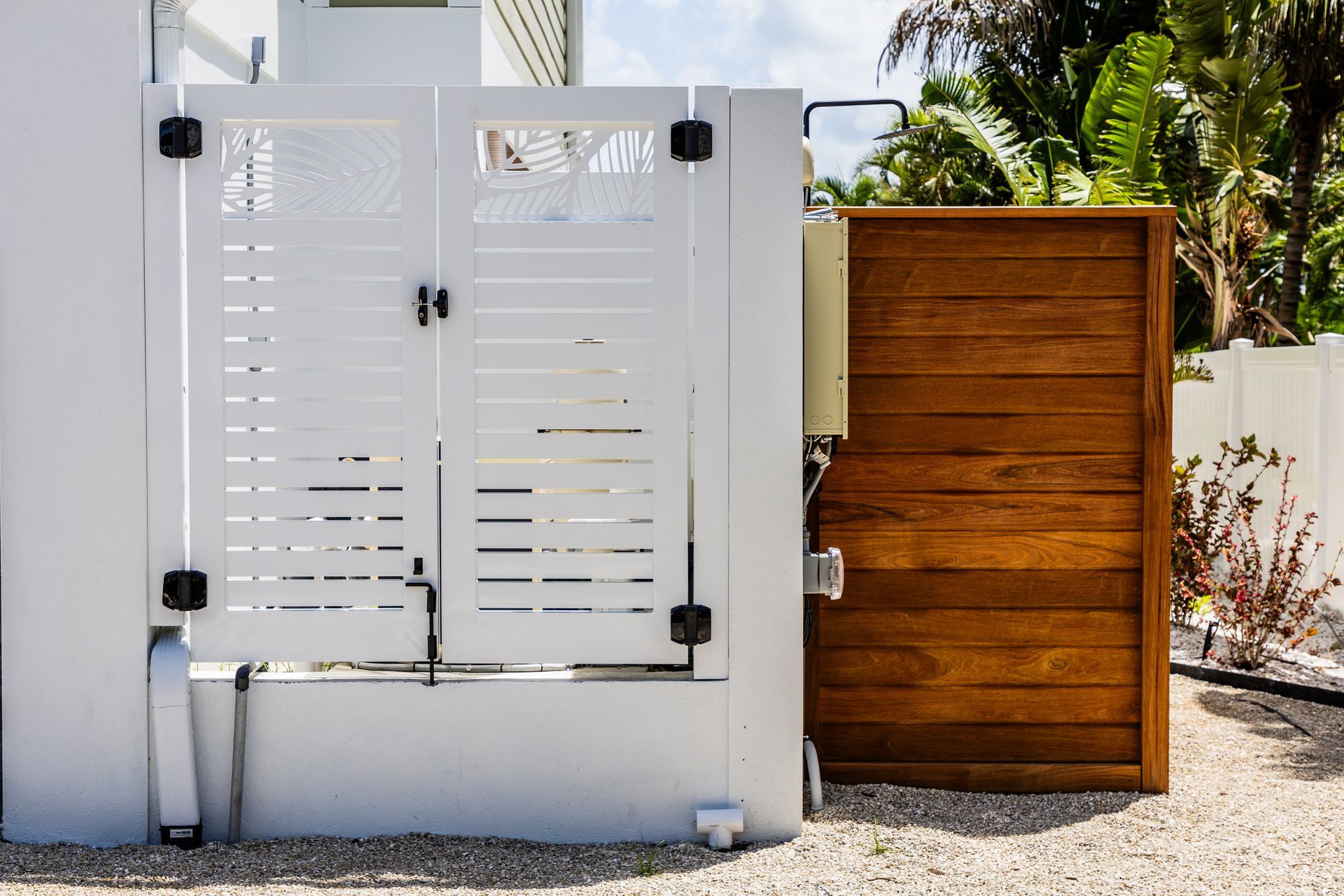
- Pedestrian gates
- Driveway gates
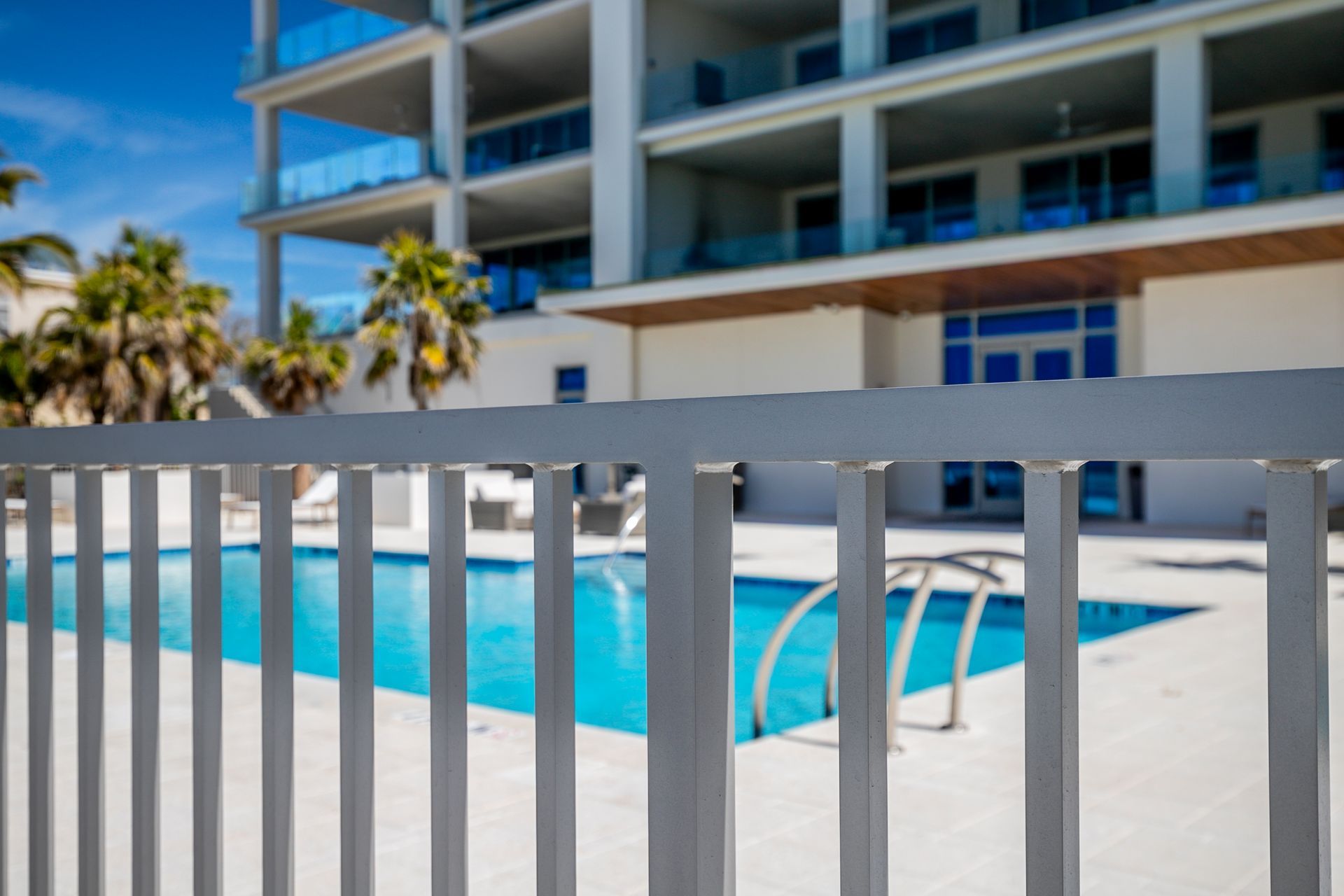
- Aluminum railings
- Equipment screens
- Privacy screens
- Architectural aluminum features
The purpose is not simply to make something unique. It is to make the finished piece work with the property, rather than forcing the property to work around the product.
What Is Standard Aluminum Installation?
Standard aluminum installation uses a prefabricated, stock-size, or modular product.
These products are usually manufactured in predetermined:
- Widths
- Heights
- Profiles
- Patterns
- Colors
- Panel sizes
- Hardware configurations
The installer selects the closest available option and determines whether it will work in the space.
A standard aluminum product is not automatically lower quality. It may be the right choice for a simple project with predictable conditions.
For example, a standard gate or railing may work well when:
- The opening matches a common size
- The ground is level
- The mounting points are ready
- No special hardware is needed
- The design fits the property
- Little or no modification is required
The main difference is that the product already exists before the property is fully considered.
Custom Aluminum Fabrication vs. Standard Installation
| Comparison factor | Custom aluminum fabrication | Standard aluminum fabrication |
|---|---|---|
| Dimensions | Built for the actual project | Limited to stock or modular sizes |
| Design | Developed around the property | Chosen from available options |
| Site Conditions | Can account for slopes, columns, and irregular layouts | Works best in straightforward conditions |
| Hardware | Planned before fabrication | Limited by product compatibility |
| Finish | Can often be coordinated with the property | Usually limited to standard colors |
| Lead time | Includes design and fabrication | May be faster if the correct product is available |
| Initial Cost | Usually higher | Often lower |
| Modification | Reduced through advance planning | May require field changes |
| Best use | Complex or project-specific applications | Simple, standard applications |
Neither option is automatically better.
The right one depends on the project.
The Biggest Difference Is Where the Process Begins
Standard installation begins with the product.
The installer looks at available sizes and styles, then determines whether one can be adapted to the property.
Custom fabrication begins with the property. The fabricator looks at the opening, the function, the site conditions, and the design requirements before the component is built. That difference matters when the site cannot easily be changed.
Imagine a gate opening between two existing masonry columns.
A standard gate may be too narrow, too wide, or poorly aligned with the columns. Making it work could require filler panels, new posts, changes to the opening, or modifications to the gate frame.
A custom gate can be designed around the finished opening from the start.
The same idea applies to equipment screens. A standard panel may hide the equipment, but it could also restrict airflow or make maintenance access more difficult.
A custom screen can be planned around the actual units, service clearances, and layout.
How Measurements Affect the Decision
Standard aluminum systems work best when the installation area is predictable.
That usually means:
- Square openings
- Level ground
- Standard post spacing
- Straight runs
- Prepared concrete
- Accessible mounting points
When those conditions are present, a standard product may be installed with very little adjustment.
Custom fabrication becomes more practical when the property includes:
- Sloped ground
- Uneven surfaces
- Existing masonry columns
- Irregular openings
- Limited clearance
- Multiple elevations
- Fixed structures
- Unusual equipment layouts
Accurate measurements involve more than checking the distance from one side to another.
A fabricator may also need to account for:
- Posts
- Hinges
- Latch clearance
- Ground clearance
- Swing space
- Anchor locations
- Nearby walls
- Landscaping
- Existing railings
- Access doors
A product can technically fit the opening and still be difficult to install, operate, or maintain.
How Much Design Flexibility Do You Need?
Standard aluminum products usually come in a set range of styles, sizes, and finishes.
That can make the decision easier when the available options already suit the property.
Custom fabrication offers more flexibility over:
- Width
- Height
- Frame proportions
- Picket spacing
- Slat direction
- Privacy level
- Gate shape
- Panel layout
- Decorative details
- Powder coat color
Custom does not always mean decorative.
In many cases, customization is about proportion and fit.
A railing may need to follow a specific stair angle. A gate may need to match existing columns. An equipment screen may need to hide mechanical units without blocking access.
The final design can still be simple. It is simply designed for the site rather than selected from a catalog.
How Structure and Material Selection Differ
Custom fabrication allows the component to be planned around its final dimensions and use.
The fabricator can consider:
- Frame size
- Aluminum profile
- Material thickness
- Span
- Height
- Reinforcement
- Bracing
- Hardware loads
- Wind exposure
- Frequency of use
This becomes important for wide gates, tall privacy screens, long railing runs, and commercial components used throughout the day.
Standard aluminum products are built within predefined design limits.
They may perform very well when installed according to those limits. Problems are more likely when a standard product is changed beyond the way it was designed to be used.
For example, adding a solid privacy panel to an open gate changes the weight and the amount of wind the gate catches.
The original frame, hinges, and posts may not have been selected for that added load.
Custom fabrication allows those factors to be considered before the gate is built.
That does not mean custom aluminum is automatically stronger. Strength depends on the material, frame design, reinforcement, installation, and planned use.
Hardware Can Change the Entire Project
Hardware is one of the most important differences between standard and custom aluminum work.
A simple residential gate may only need:
- Hinges
- A latch
- A keyed lock
A commercial or multifamily entrance may need:
- Self-closing hardware
- A keypad
- A card reader
- An electric strike
- A magnetic lock
- An intercom
- A request-to-exit device
- A gate operator
With custom fabrication, those hardware requirements can be included in the design before the gate or component is built.
That may involve:
- Reinforcing the lock area
- Adding mounting plates
- Planning wiring routes
- Adjusting the frame
- Preparing for electronic hardware
- Working with an access-control provider
Standard products may support some of these systems, but compatibility should be confirmed before purchase.
Adding hardware later can require drilling, cutting, welding, or recoating. It may also affect the finish, appearance, or manufacturer warranty.
When access control matters, it should be planned early.
Is Standard Installation Always Easier?
Not necessarily.
A standard product may be easier to install when:
- The dimensions match
- The item is available
- The site is ready
- The surface is level
- No special hardware is required
But installation becomes more complicated when the site must be changed to fit the product.
That may involve:
- Moving posts
- Adding filler panels
- Cutting sections
- Drilling new holes
- Altering concrete
- Adjusting columns
- Repairing the finish
Those changes can reduce the former cost or time advantage.
Custom fabrication takes more planning before installation, but that planning can reduce surprises once the component reaches the property.
The measurements, mounting points, hardware, and site conditions have already been considered.
Which Option Is Faster?
Standard installation can be faster when the correct product is available and the property is ready.
A simple project may only require:
- Product selection
- Ordering
- Site preparation
- Installation
Custom fabrication usually involves more steps:
- Site evaluation
- Measurements
- Design
- Approval
- Fabrication
- Powder coating
- Installation
That usually creates a longer pre-installation timeline.
But standard does not always mean fast.
A product may be delayed, unavailable in the right size, incompatible with the selected hardware, or difficult to install without modification.
A product that comes quickly but needs extensive changes may not save much time.
The actual timeline depends on product availability, design complexity, finish, site preparation, and installation conditions.
Is Custom Aluminum Fabrication More Expensive?
In most cases, yes.
Custom fabrication usually has a higher initial cost because the project includes:
- Measurement
- Design
- Material preparation
- Cutting
- Welding
- Reinforcement
- Hardware preparation
- Powder coating
- Installation
Standard products often cost less because the same design is produced in larger quantities.
Still, the product price is only part of the total project cost.
A standard installation may also require:
- Extra posts
- Filler sections
- Site changes
- Hardware alterations
- Cutting or drilling
- Finish repairs
- Additional labor
- Replacement of incompatible parts
This does not mean custom fabrication always costs less in the long run.
It means the comparison should include the full project, not just the cost of the product itself.
When Standard Aluminum Installation Makes Sense
A standard product may be the reasonable choice when the project is simple and closely matches what is already available.
It may be suitable when:
- The opening matches a standard size
- The site is level
- The mounting points are ready
- The available design suits the property
- Basic hardware is enough
- No access-control integration is needed
- Slight modification is required
- Budget and timeline are the main priorities
For a straightforward residential opening, a standard product may provide everything the property needs.
In that case, paying for full custom fabrication may not add enough value.
When Custom Fabrication Is the Better Choice
Custom fabrication becomes more useful when the project includes conditions that a stock product cannot address properly.
That may include:
- Nonstandard dimensions
- Sloped or uneven ground
- Existing masonry columns
- Unusual stair or balcony layouts
- Architectural coordination
- Privacy and airflow requirements
- Access-control integration
- Frequent commercial use
- Large spans
- Matching gates and railings
- Equipment screens around existing units
- Considerable modifications to a standard product
The value of customization is not only in creating something different.
It is in planning the dimensions, frame, hardware, finish, and installation together.
How This Applies to Common Aluminum Projects
Pedestrian and Driveway Gates
A standard gate may work when the opening is level, square, and close to a stock size.
Custom fabrication may be a better fit when the gate must:
- Fit between existing columns
- Follow sloped ground
- Match a fence
- Include privacy panels
- Support a gate operator
- Work with a keypad or card reader
- Handle frequent traffic
Gates are sensitive to alignment. Even small errors can affect how the gate swings, closes, and latches.
Aluminum Railings
Modular railings can work for simple balconies, platforms, and level walkways.
Custom railings may be needed for:
- Nonstandard stair angles
- Curved layouts
- Multiple elevation changes
- Irregular balconies
- Custom patterns
- Transitions between areas
- Coordination with gates or other features
The railing must follow the actual structure while keeping spacing and alignment consistent.
Equipment Screens
Equipment screens are often more project-specific because they have to do more than hide mechanical units.
The design may need to account for:
- Equipment height
- Unit spacing
- Ventilation
- Service access
- Access doors
- Property lines
- Wind exposure
- Building appearance
A standard panel may provide visual coverage but still interfere with airflow or maintenance.
Custom fabrication allows the screen to be designed around the equipment rather than placed in front of it without enough planning.
Privacy and Architectural Screens
Standard privacy panels may work well for simple, repetitive layouts.
Custom screens may be more appropriate when the project requires:
- A specific amount of coverage
- Controlled panel spacing
- A custom pattern
- Integration with walls or railings
- Access doors
- Coordination with the building
- Wind-conscious framing
More enclosed screens need additional structural planning because they catch more wind than open designs.
Questions to Ask Before Choosing
Before deciding between standard installation and custom fabrication, ask:
- Does the opening match an available standard size?
- Is the site level and straightforward?
- Will the product need extensive modification?
- Does it need to match an existing gate, railing, or screen?
- Are there privacy or airflow requirements?
- Will the component receive frequent use?
- Is special locking or access-control hardware required?
- Can the selected product support that hardware?
- Are there HOA or architectural standards?
- Who will take the final measurements?
- What site preparation is included?
- Will one company handle design, fabrication, finishing, and installation?
- What happens if the product does not fit?
- What maintenance will be required?
The answers usually make the right approach much clearer.
Work With a Custom Aluminum Fabricator in Sarasota
The choice between custom aluminum fabrication and standard aluminum installation should be based on the project, not on the assumption that one option is always better.
A simple opening with basic requirements may be suited to a standard product.
A project involving unusual dimensions, existing columns, specialized hardware, architectural coordination, or difficult site conditions may benefit from custom fabrication.
Freedom Aluminum works with homeowners, contractors, property managers, and commercial clients throughout the Sarasota area.
Depending on the project, the process may include:
- Site evaluation
- Custom measurements
- Design consultation
- 3D CAD review
- Aluminum fabrication
- Welding
- Hardware preparation
- Powder coating
- Installation
- Final adjustment
Contact Freedom Aluminum to discuss your project and determine whether custom fabrication or a more standard solution makes sense for your property.