The Advantages and Disadvantages of Aluminum Fabrication
Aluminum is widely used for custom gates, railings, equipment screens, privacy panels, frames, and other architectural features. It is relatively lightweight, rust-resistant, easy to shape, and compatible with several finishing options.
However, that does not mean aluminum is automatically the best material for every fabrication project.
The main advantages of aluminum fabrication include its low weight, corrosion resistance, design flexibility, clean appearance, and suitability for many exterior applications. Its possible disadvantages include a higher initial cost than some standard products, lower stiffness than steel in certain applications, specialized welding requirements, and susceptibility to damage under significant impact. The real value of aluminum depends on how the material is selected, designed, fabricated, finished, and installed.
What Is Aluminum Fabrication?
Aluminum fabrication is the process of turning aluminum sheets, tubes, channels, angles, panels, and other profiles into a finished product.
Depending on the project, the fabrication process may involve:
- Site measurements
- Design and planning
- Material selection
- Cutting
- Machining
- Bending or forming
- Welding
- Assembly
- Surface preparation
- Powder coating
- Hardware preparation
- Delivery
- Installation
Custom aluminum fabrication is different from purchasing a standard product from a catalog.
A custom gate, railing, or equipment screen is built around the measurements, appearance, function, and installation conditions of a specific property. This gives property owners more control over the finished result, but it also means that each individual project must be evaluated individually.
Aluminum Fabrication Pros and Cons at a Glance
| ADVANTAGES | POTENTIAL DISADVANTAGES |
|---|---|
| Relatively lightweight | May require larger profiles for some applications |
| Resistant to rust | Can still corrode under certain conditions |
| Suitable for custom designs | Requires specialized welding knowledge |
| Compatible with powder coating | Surface preparation affects finish quality |
| Useful for many outdoor projects | Can dent or bend under significant impact |
| Generally lower maintenance | Custom fabrication may cost more initially |
| Recyclable | Not ideal for every structural application |
These characteristics should not be considered separately. A lightweight material may still require proper bracing. A corrosion-resistant product may still need the correct hardware and finish. A visually pleasing gate may still fail if the frame, posts, or hinges are not properly designed.
Advantages of Aluminum Fabrication
Aluminum Is Relatively Lightweight
One of aluminum’s most useful characteristics has its low weight compared with many other metals.
This can make aluminum easier to handle during fabrication, transportation, and installation. It can also reduce unnecessary strain on other parts of the finished system.
This is especially helpful for products with moving components, such as:
- Swing gates
- Sliding gates
- Pedestrian gates
- Automated driveway gates
- Removable equipment-screen panels
A heavy gate places more stress on its hinges, posts, rollers, tracks, and gate operator. Aluminum allows a fabricator to create a substantial gate without automatically adding excessive weight.
That does not mean every aluminum product is light or that lightweight automatically means strong. The final weight and performance depend on the dimensions, profile, thickness, framing, hardware, and overall design.
Aluminum Has a Strong Strength-to-Weight Relationship
Aluminum can provide the strength needed for many architectural and exterior applications while keeping the complete product manageable. This strength-to-weight relationship makes it useful for:
- Driveway and pedestrian gates
- Stair and balcony railings
- Privacy panels
- Equipment screens
- Architectural frames
- Automated gate systems
The strength of a finished aluminum product depends on more than the material name.
A fabricator must consider:
- Aluminum alloy
- Profile shape
- Wall thickness
- Frame construction
- Bracing
- Welds
- Connections
- Mounting points
- Hardware
- Installation conditions
For example, a wide driveway gate may require a larger frame and additional bracing compared with a smaller pedestrian gate. A tall equipment screen may need stronger posts and support than a short decorative panel.
Aluminum can be strong enough for many applications, but the product must be designed around what it needs to do.
Aluminum Does Not Rust Like Ferrous Steel
Aluminum does not develop the same iron-oxide rust commonly associated with unprotected steel.
This makes it a practical option for many exterior projects exposed to:
- Rain
- Humidity
- Irrigation
- Outdoor moisture
- Coastal conditions
For Sarasota property owners, this is an important advantage. Outdoor gates, railings, and equipment screens may be exposed to strong sunlight, frequent rain, humidity, and, in some locations, salt air.
However, aluminum should not be described as completely corrosion-proof.
Corrosion may still occur depending on:
- Environmental exposure
- Dissimilar-metal contact
- Damaged finishes
- Trapped moisture
- Fastener and hardware selection
- Drainage
- Installation details
- Maintenance
The material, finish, hardware, and installation should be considered as one complete system.
Aluminum Can Be Fabricated Into Custom Designs
Aluminum is compatible with several fabrication methods.
It can be:
- Cut
- Drilled
- Machined
- Bent
- Formed
- Welded
- Assembled
- Powder coated
This gives fabricators the ability to create products in different sizes, shapes, layouts, and styles.
Aluminum may be fabricated into:
- Modern driveway gates
- Decorative pedestrian gates
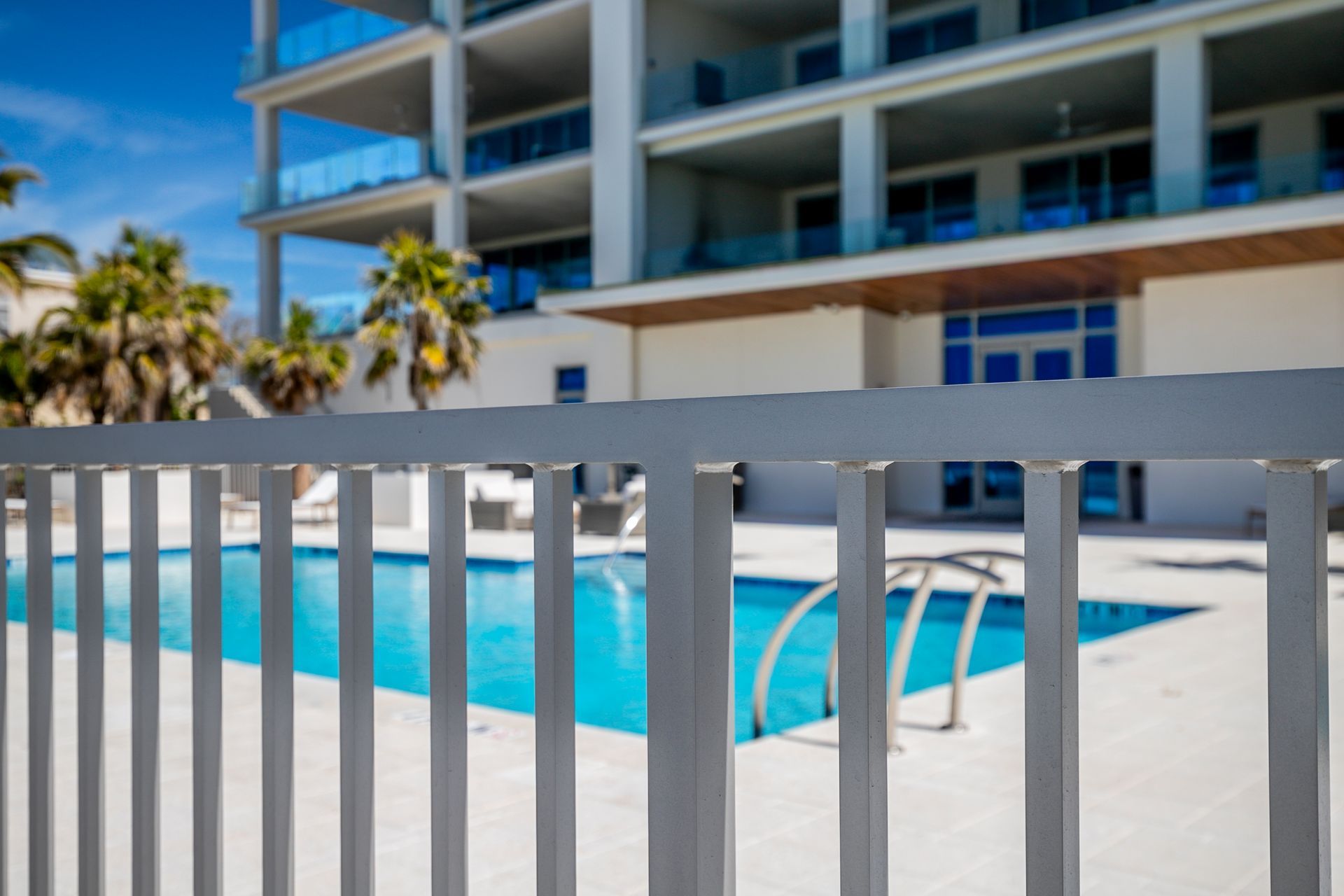
- Open-picket railings
- Privacy railings
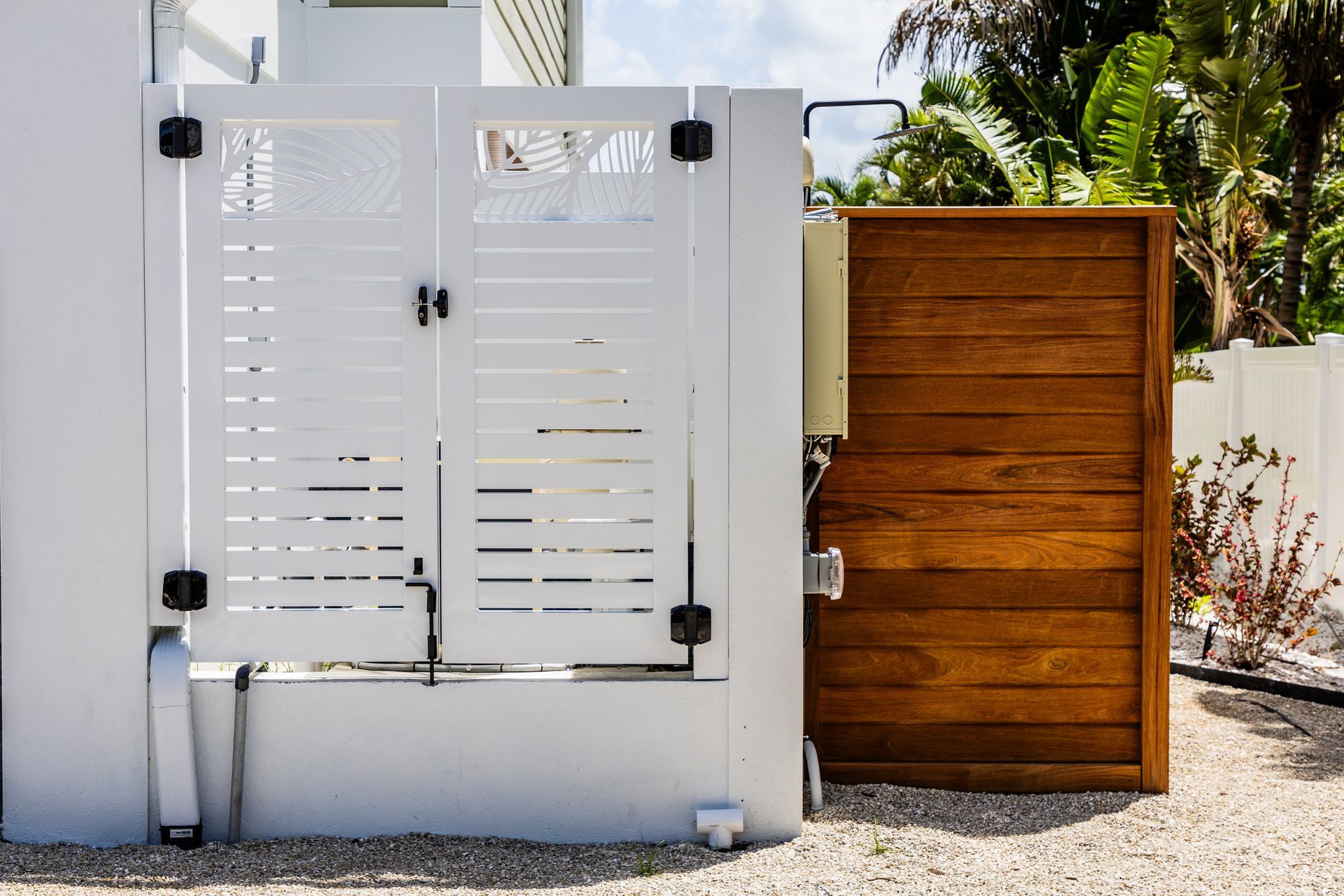
- Louvered equipment screens
- Slatted panels
- Architectural frames
- Custom access doors
- Removable screen sections
This flexibility is especially valuable when a standard product does not fit the actual opening or match the property’s design.
A custom aluminum gate, for example, can be built around the exact width of the driveway, the required swing or slide direction, the gate hardware, and the property’s architectural style.
An equipment screen can be designed around the size of the mechanical system while preserving airflow and maintenance access. The material creates possibilities, but the design still needs to be deliberate.
Aluminum Can Be Powder Coated in Different Colors and Finishes
Powder coating can give fabricated aluminum a consistent color and finished appearance. Depending on the project, the finish may be selected to:
- Match the building
- Coordinate with an existing fence
- Complement exterior trim
- Meet HOA appearance requirements
- Create a modern or decorative look
- Provide additional surface protection
Powder-coated aluminum can look clean and architectural rather than overly industrial.
The quality of the finished surface depends on proper preparation, coating, handling, and installation. Powder coating should not be treated as a solution for poor fabrication or unsuitable materials.
Aluminum Can Require Less Routine Maintenance
Properly fabricated and finished aluminum generally requires less rust-related maintenance than unprotected ferrous metals.
It may not require the same repeated cycle of rust removal, priming, and repainting.
Routine maintenance may still include:
- Cleaning dirt and environmental deposits
- Inspecting hinges, latches, and locks
- Checking gate alignment
- Monitoring damaged finishes
- Keeping equipment-screen openings clear
- Inspecting posts and mounting points
- Servicing gate operators and access-control hardware
Aluminum is often considered a lower-maintenance material, but it is not maintenance-free.
The moving components of a gate, for example, still require care even when the aluminum frame remains in good condition.
Aluminum Works for Residential and Commercial Projects
Aluminum can be used for a wide range of residential applications, including:
- Driveway gates
- Pedestrian gates
- Balcony railings
- Stair railings
- Porch railings
- Pool-equipment screens
- Privacy panels
It can also be used for commercial projects such as:
- Mechanical-equipment screens
- Rooftop enclosures
- Utility screens
- Access gates
- Architectural panels
- Commercial railings
- Repeated panel systems
Residential and commercial projects may use the same material, but they do not always have the same priorities.
A homeowner may focus on privacy, appearance, and matching the home. A commercial property manager may place more emphasis on equipment access, repeatable panel sizes, maintenance clearance, and installation coordination.
Custom fabrication allows the design to respond to those different requirements.
Aluminum Is Recyclable
Aluminum can be recycled and returned to productive use.
This may be relevant to property owners, architects, and contractors who are considering long-term material use. However, recyclability should not be the only reason to select aluminum.
A poorly designed product that requires early replacement is not automatically a sensible option simply because the raw material can be recycled. A better approach is to combine appropriate material selection with durable design, proper fabrication, and correct installation.
Disadvantages and Limitations of Aluminum Fabrication
Custom Aluminum Fabrication May Cost More Initially
Custom aluminum fabrication may have a higher initial cost than some standard or prefabricated products. The total cost includes more than the aluminum itself.
A custom project may require:
- On-site measurements
- Design work
- Material planning
- Cutting and machining
- Welding
- Assembly
- Surface preparation
- Powder coating
- Hardware installation
- Delivery
- On-site installation
This is one reason a custom gate or railing may cost more than a standard panel taken from a catalog. The price depends on the size, design, material thickness, hardware, finish, site conditions, and installation requirements.
A higher initial price does not automatically mean poor value. Property owners should consider the custom fit, expected maintenance, hardware performance, durability, and suitability for the property.
At the same time, aluminum should not be presented as the least expensive option for every project.
Aluminum Is Not Suitable for Every Structural Application
Aluminum can be used for many gates, railings, screens, and architectural features, but some projects may require a different material or construction method.
Examples may include projects involving:
- Extremely heavy loads
- Severe impact exposure
- Very large unsupported spans
- High-temperature environments
- Specialized industrial use
- Specific engineering requirements
- Building specifications requiring another material
In some cases, the solution may involve a stronger aluminum profile, thicker material, additional bracing, or a different alloy. In other cases, steel or another material may be more appropriate.
The correct recommendation should be based on what the finished product needs to do, not on the assumption that one material is always better.
Aluminum Can Be Less Stiff Than Steel
Strength and stiffness are not exactly the same.
An aluminum component may be strong enough for a particular use but still flex more than a comparable steel component.
This can matter in:
- Long gate frames
- Tall equipment screens
- Wide openings
- Large privacy panels
- High-wind locations
- Products with moving hardware
A fabricator may handle this by using:
- Larger profiles
- Thicker walls
- Additional bracing
- Better frame geometry
- Shorter panel sections
- Stronger posts
- Appropriate mounting points
This is why the dimensions and design of the complete system matter.
A gate should not be designed by selecting the lightest available profile and assuming it will remain straight. The width, weight, hardware, movement, wind exposure, and support system must be evaluated together.
Aluminum Can Dent or Bend Under Significant Impact
Aluminum is not automatically fragile, but it can dent, scratch, deform, or bend when subjected to enough force.
Possible causes include:
- Vehicle impact
- Heavy equipment
- Falling objects
- Repeated abuse
- Improper handling
- Weak mounting points
- Undersized frames
- Inadequate bracing
Impact exposure should be considered before fabrication begins.
A decorative pedestrian gate has different requirements from a gate located near delivery vehicles. An equipment screen in a protected residential yard has different risks from one installed near commercial machinery.
The design should reflect the environment.
Aluminum Welding Requires Specialized Skill
Aluminum does not behave exactly like steel during welding.
The quality of the final product may depend on:
- Correct material preparation
- Clean surfaces
- Proper welding equipment
- Alloy compatibility
- Heat control
- Joint design
- Fabricator experience
Poor welding or assembly may lead to:
- Distortion
- Weak joints
- Poor alignment
- Uneven weld appearance
- Finish defects
- Premature movement or failure
This is one reason it is important to work with a company that has experience in custom aluminum fabrication rather than assuming all metal fabrication processes are identical.
Aluminum Expands and Contracts With Temperature Changes
Like other materials, aluminum expands and contracts as temperatures change.
This movement may need to be considered in:
- Long panels
- Large equipment screens
- Closely fitted sections
- Gates
- Architectural frames
- Mounting connections
A properly designed system should account for expected environmental movement without creating unnecessary stress or causing components to bind.
This is particularly important for outdoor projects exposed to Florida heat and direct sunlight.
Contact With Dissimilar Metals Requires Care
Aluminum may experience galvanic corrosion when it comes into contact with certain dissimilar metals under the wrong environmental conditions.
This means a fabricator may need to consider:
- Fastener material
- Hinges
- Brackets
- Steel posts
- Mounting surfaces
- Protective coatings
- Isolation materials
- Drainage
- Moisture exposure
The issue is not that aluminum cannot be used with other materials. It means those connections should be planned properly.
Hardware selection is an important part of the complete design, especially for gates, railings, and exterior screens.
Powder Coating Quality Depends on Surface Preparation
Powder coating can improve appearance and provide additional surface protection, but the quality of the result depends on the entire finishing process.
Poor preparation or application may cause:
- Uneven texture
- Inconsistent color
- Adhesion problems
- Premature coating damage
- Exposed areas
- Visible fabrication defects
The material should be fabricated, prepared, coated, transported, and installed carefully.
A high-quality finish begins before the powder coating is applied.
Repairs and Modifications May Require a Specialist
A custom fabricated aluminum product may not use standard replacement components.
Repairs may require:
- Matching the original profile
- Recreating a custom section
- Removing the product
- Aluminum welding
- Realignment
- Hardware replacement
- Refinishing
- Reinstallation
This does not mean fabricated aluminum cannot be repaired. It means repairs and modifications may require someone familiar with the original construction and the correct fabrication methods.
How the Advantages and Disadvantages Apply to Different Projects
Custom Aluminum Gates
Aluminum is often selected for driveway and pedestrian gates because it offers custom design flexibility without adding unnecessary weight.
Advantages may include:
- Reduced stress on moving hardware
- Custom dimensions
- Automation compatibility
- Corrosion resistance
- Multiple design and finish options
The design must still consider:
- Gate width
- Frame stiffness
- Posts
- Hinges or rollers
- Operator capacity
- Wind exposure
- Access-control hardware
- Impact risks
- Installation conditions
A gate performs best when the frame, posts, hardware, finish, and installation are planned together.
Aluminum Railings
Aluminum railings can provide a clean appearance, outdoor durability, and a custom fit for stairs, balconies, porches, decks, and elevated areas.
The project must still account for:
- Railing height
- Post spacing
- Mounting surface
- Stair angles
- Connections
- Structural support
- Safety requirements
- Exterior exposure
A railing is not simply a decorative frame. It must be built and installed for the specific location.
Aluminum Equipment Screens
Aluminum is useful for equipment screens because it can be fabricated into:
- Frames
- Slats
- Louvers
- Solid panels
- Access doors
- Removable sections
This allows the screen to conceal HVAC units, pool equipment, generators, utility systems, or commercial mechanical equipment.
The design must preserve:
- Airflow
- Maintenance access
- Equipment clearance
- Panel removal
- Drainage
- Structural stability
- Wind resistance
A screen should improve the appearance of the area without interfering with the equipment it is meant to conceal.
Is Aluminum Suitable for Exterior Projects in Sarasota?
Aluminum is frequently used for exterior fabrication in Sarasota because it offers corrosion resistance, lower weight, design flexibility, and compatibility with protective finishes. However, each property has different exposure conditions. An exterior aluminum project may need to account for:
- Strong sunlight
- Rain
- Humidity
- Coastal air
- Wind
- Irrigation
- Drainage
- Hardware compatibility
- Finish selection
- Maintenance access
- Mounting conditions
A property closer to the coast may have different exposure than an inland property. A gate in an open area may experience more wind than one protected by surrounding structures.
The recommendation should be based on the actual site rather than a general assumption about the entire Sarasota area.
When Is Aluminum Fabrication a Good Choice?
Aluminum may be a good choice when a project requires:
- A custom fit
- Reduced moving weight
- Corrosion resistance
- Exterior durability
- Architectural design flexibility
- Powder-coated finishes
- Removable panels
- Privacy slats
- Louvers
- Equipment concealment
- Gate automation
- Coordination with an existing property
It is particularly useful for projects where appearance, weight, outdoor exposure, and customization all matter.
When Might Aluminum Not Be the Best Choice?
Aluminum may not be the first recommendation when a project involves:
- Severe impact exposure
- Extremely heavy loads
- High-temperature conditions
- Large unsupported dimensions
- Specialized industrial requirements
- A specification requiring another material
- Conditions that cannot be addressed through the correct profile or design
In some cases, aluminum may still work with additional reinforcement or a different system. In others, another material may be more appropriate.
The decision should be based on the complete project rather than one material characteristic.
Questions to Ask Before Choosing Aluminum
Before deciding whether aluminum is right for a fabrication project, consider the following questions:
- What does the finished product need to do?
- Will it move or remain stationary?
- What are the required dimensions?
- What loads will it experience?
- Will it be exposed to vehicle or equipment impact?
- How much wind exposure will it receive?
- Is the property near a coastal environment?
- What type of finish is needed?
- Which hardware will be used?
- Will maintenance access be required?
- Does the project need removable panels?
- Are there HOA or property-management requirements?
- Does the installation area have uneven surfaces or limited access?
- Would another material perform better for part of the project?
These questions help determine whether aluminum is suitable and how the product should be designed.
Why Proper Design and Fabrication Matter
The material alone does not determine whether a custom project will perform well.
A complete aluminum fabrication project may involve:
- Site evaluation
- Accurate measurements
- Review of functional requirements
- Material and profile selection
- Design and planning
- Cutting and machining
- Welding and assembly
- Hardware preparation
- Surface preparation
- Powder coating
- Delivery
- Installation
- Final alignment and inspection
Mistakes at any stage can affect the finished product.
An undersized gate frame may sag. Poor hardware planning may make a gate difficult to operate. An equipment screen without sufficient access may complicate future maintenance. A railing with weak mounting points may not perform as intended.
This is why custom aluminum fabrication should be coordinated from the initial measurement through final installation.
Work With a Custom Aluminum Fabricator in Sarasota
Freedom Aluminum works with Sarasota-area homeowners, contractors, property managers, and commercial clients who need custom aluminum solutions designed around their property.
Projects may include:
- Custom driveway gates
- Pedestrian gates
- Aluminum railings
- Equipment screens
- Privacy screens
- Architectural aluminum features
- Custom measurements
- 3D CAD design review
- In-house fabrication
- Powder-coated finishes
- Installation
Aluminum is a practical and versatile material, but its advantages are most valuable when the project is designed correctly.
Contact Freedom Aluminum to discuss your project and determine whether aluminum is the right material for your custom gate, railing, equipment screen, or exterior architectural feature.