How to Hide HVAC Equipment Without Restricting Airflow
How to Hide HVAC Equipment Without Restricting Airflow
The best way to hide outdoor HVAC equipment is to use a ventilated screen that blocks the direct view of the unit without enclosing it.
Louvered or perforated aluminum panels are ideal because they provide concealment while allowing air to move around the condenser. The screen must also follow the HVAC manufacturer’s clearance requirements and leave enough space for maintenance.
The goal is simple: hide the equipment without trapping heat or blocking airflow.
Why HVAC Equipment Needs Open Space
An outdoor condenser releases heat from inside the building into the surrounding air. To do this efficiently, it needs enough space to draw in outdoor air and discharge warm air.
Placing solid walls, dense shrubs, or tightly spaced panels around the unit can restrict this process. Warm air may remain near the condenser and circulate back through the system.
A poorly designed enclosure can also make it harder to:
- Clean the condenser
- Remove leaves and debris
- Reach electrical components
- Access refrigerant connections
- Complete repairs or replacement
An HVAC screen should provide privacy without functioning like a sealed box.
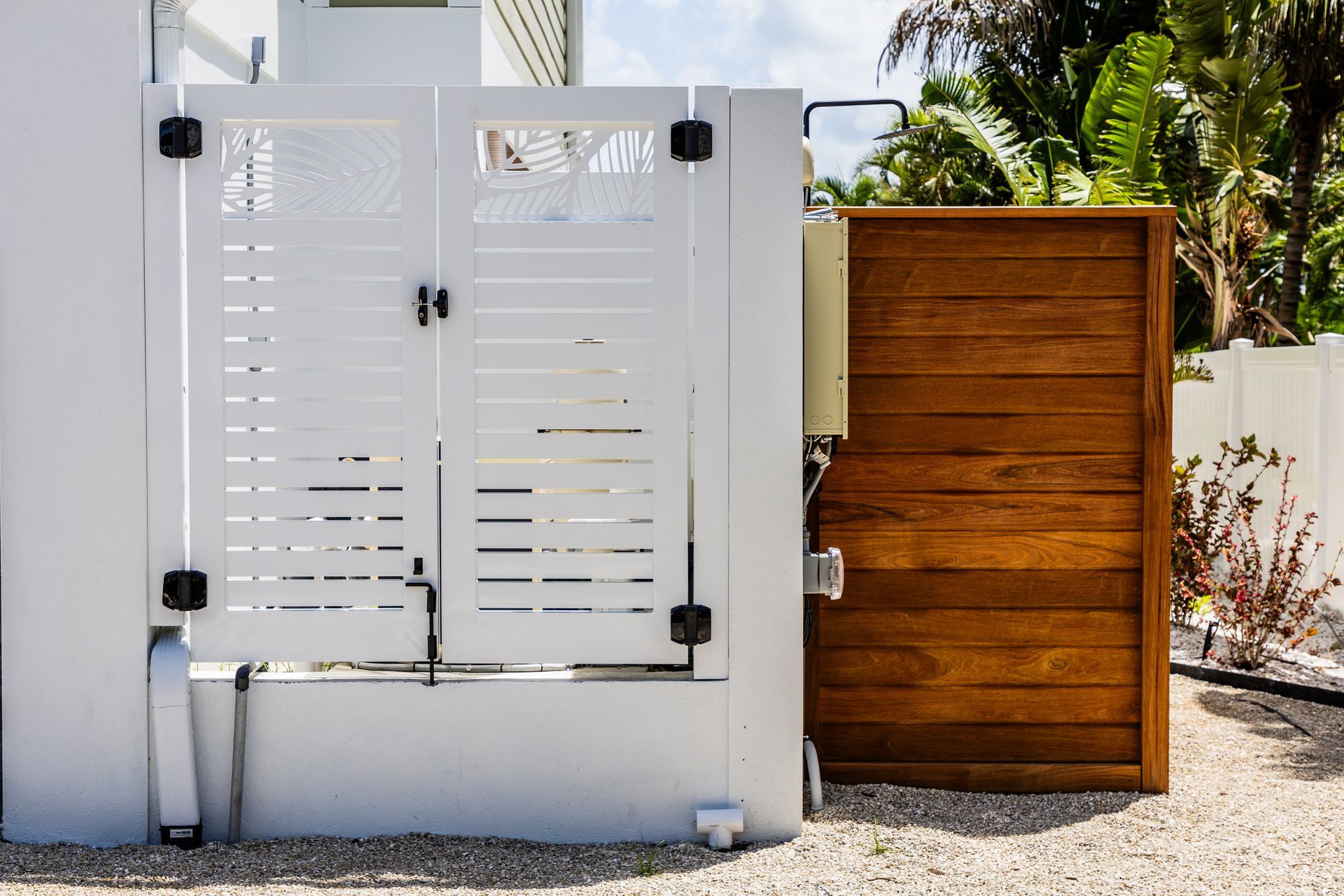
Use Louvered or Perforated Aluminum Panels
Solid privacy panels may hide an AC unit, but they can also limit ventilation. Louvered and perforated aluminum screens provide a better balance between appearance and airflow.
Louvered aluminum screens
Louvered screens use angled slats to reduce the visibility of the equipment. Air can continue moving through the spaces between the louvers.
The slat spacing and angle can be customized based on:
- The primary viewing direction
- The location of the condenser
- The amount of privacy needed
- The property’s architectural style
- The required open area
The louvers should not be placed as tightly as possible simply to create more privacy. Greater coverage can also mean less airflow.
Perforated aluminum screens
Perforated panels use repeated openings across the surface. They can create a clean, modern appearance while still allowing ventilation.
The perforation pattern should provide enough open area for the equipment behind it. A decorative panel with very small openings may look attractive but may not be appropriate for an active HVAC system.
Freedom Aluminum fabricates custom louvered and perforated equipment screens for residential and commercial properties in Sarasota.
Follow the Manufacturer’s Clearance Requirements
There is no single clearance measurement that applies to every outdoor HVAC unit.
Required spacing can vary according to:
- Manufacturer and model
- Unit size
- Air-intake location
- Discharge direction
- Nearby walls
- Service-panel location
- Overhead obstructions
- Distance from other condensers
Before designing an equipment screen, check the installation manual for the exact HVAC model. An HVAC technician may also recommend additional working space based on the property layout.
The screen should be fabricated around these requirements rather than based on a general rule.
Keep the Top of the Unit Open
Many residential condensers release warm air through a fan at the top.
Installing a roof, shelf, countertop, or solid cover directly above the unit may interfere with heat discharge. It can also redirect warm air toward the sides of the condenser.
A three-sided equipment screen with an open top is often more appropriate than a fully enclosed structure.
Any overhead feature should only be added after confirming the vertical-clearance requirements for the specific unit.
Include Maintenance Access
An equipment screen should not need to be completely dismantled whenever the HVAC system requires service.
Technicians may need to reach the:
- Service panel
- Electrical components
- Condenser coil
- Refrigerant lines
- Valves and connections
- Equipment disconnect
Depending on the layout, the screen may need a hinged gate, removable panel, or wider opening on the service side.
The access point should be positioned according to the HVAC unit’s working side, not simply where a gate looks most symmetrical.
Screen Only the Sides That Need Concealment
An outdoor HVAC unit does not always need to be hidden from all four sides.
For example, a condenser may only be visible from the street, driveway, patio, or neighboring property. Screening those specific viewing angles can provide privacy while leaving other sides open.
Using fewer screened sides can offer:
- Better airflow
- Easier maintenance
- Less trapped debris
- A cleaner design
- Lower material requirements
A two-sided or three-sided screen may be more practical than surrounding the entire condenser.
Keep Plants Away From the Screen
Landscaping can soften the appearance of an HVAC screen, but plants should not cover the ventilation openings.
Overgrown shrubs, vines, and branches can reduce the effective open area of louvered or perforated panels. They can also block the access gate or grow toward the condenser coil.
Leave enough room to maintain both the landscaping and the equipment screen.
The aluminum panels should provide the main visual barrier. Plants should complement the installation rather than create another enclosure.
Why Aluminum Works Well for HVAC Screens
Aluminum can be fabricated into precise frames, louvers, gates, and perforated panels. This makes it possible to design the screen around the actual equipment instead of forcing a standard enclosure into the space.
A custom aluminum HVAC screen can account for:
- Equipment dimensions
- Manufacturer clearances
- Service-access requirements
- Viewing angles
- Nearby walls and landscaping
- Multiple condenser units
- Existing gates and railings
- The building’s architectural style
Powder-coated aluminum can also be finished to coordinate with exterior trim, gates, fences, railings, or other architectural elements.
Instead of looking like an improvised cover, the equipment screen can become an intentional part of the property.
Common HVAC Screening Mistakes
Avoid these mistakes when hiding an outdoor AC unit:
Installing solid panels too close to the condenser
Solid barriers can interfere with airflow when placed near the unit.
Covering the top-discharge fan
Many condensers need substantial open space above the equipment.
Ignoring the service side
Technicians need enough room to inspect, clean, and repair the unit.
Copying another property’s clearance
Different HVAC models can have different space requirements.
Allowing plants to block the openings
Overgrown landscaping can reduce ventilation and restrict access.
Prioritizing privacy over performance
The screen should conceal the equipment without interfering with its operation.
Questions to Ask Before Installing an HVAC Screen
Before approving the design, confirm:
- What clearances does the HVAC manufacturer require?
- Where does the unit draw in and discharge air?
- Does the top need to remain open?
- Which side requires service access?
- Will the screen need a gate or removable panel?
- How will leaves and debris be removed?
- Which sides are actually visible?
- Can the screen match existing gates or railings?
Answering these questions before fabrication helps prevent airflow and maintenance problems later.
Hide the Equipment Without Enclosing It
An outdoor condenser can be concealed without placing it inside a restrictive enclosure.
The right HVAC equipment screen blocks unwanted views while maintaining airflow, heat discharge, manufacturer clearances, and technician access.
Freedom Aluminum designs and installs custom aluminum equipment screens for properties in Sarasota and surrounding areas. Screens can include louvered or perforated panels, access gates, removable sections, and custom powder-coated finishes.
Contact Freedom Aluminum to request an estimate for a custom HVAC equipment screen.