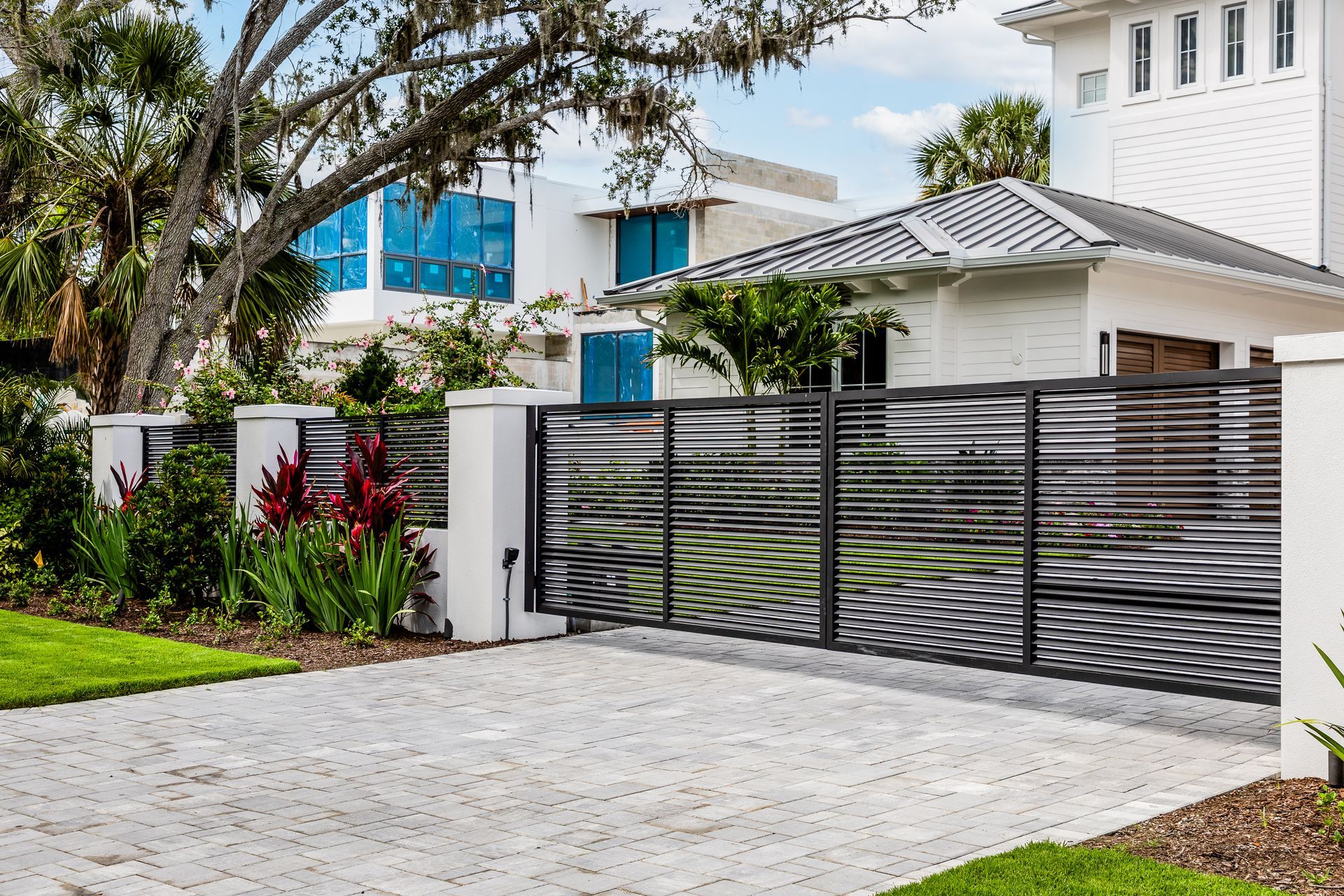
Pool Equipment Screens Sarasota | Freedom Aluminum
Custom pool equipment screens can conceal pumps, filters, and heaters while keeping the equipment accessible. The layout should account for manufacturer clearances, routine maintenance, and the space needed to remove or replace equipment—not just the finished look.
For Sarasota homeowners, the goal may be to hide an equipment pad from a patio, soften the view from a neighboring property, or create a more finished appearance beside the house. Each situation calls for a screen designed around the equipment and its surroundings.
Freedom Aluminum provides custom aluminum equipment screens, including pool equipment screening. Here is what to consider before choosing a layout.
Start With the Equipment and the Views You Want to Screen
Before deciding on screen height or panel style, identify everything within the proposed screened area. That may include a pump, filter, heater, valves, controls, and connected piping.
Record the equipment makes and models, then gather the installation manuals. Two equipment pads with similar dimensions can need different screening arrangements because their components operate and open differently.
Next, identify the views you want to block. Equipment visible from a seated patio position may require a different screen height or placement than equipment viewed from an elevated terrace.
Useful planning photos include:
- The equipment pad from every accessible side.
- The view from the patio, walkway, or neighboring side.
- Nearby walls, landscaping, and existing gates.
- The route a technician uses to reach the equipment.
These details help establish where screening adds value and where openings need to remain.
Leave Practical Access Around the Pool Pump
A pool pump screen should allow access to the basket lid, controls, and service connections. Being able to see the pump through an opening does not necessarily mean someone can work on it comfortably. Consider the tasks performed at the equipment pad. Can the basket be lifted out? Can someone reach the controls without leaning over pipes? Will a screen post obstruct access when a component needs repair?
The opening has to align with the equipment’s service side. Its position matters as much as its width.
Keep the pump’s ventilation and installation requirements part of the review. A decorative panel pattern alone does not establish that the completed arrangement provides adequate space or airflow.
Plan for Filter Removal, Not Just Filter Height
Pool filters need space above and around the tank for maintenance. Depending on the filter, servicing may involve removing a lid, cartridges, or an internal grid assembly.
This makes installed height and service clearance two different measurements.
A filter may fit neatly behind a screen, but a crossbar or overhead feature may prevent its components from being lifted out. Pentair’s Clean & Clear Plus documentation, for example, specifies vertical clearance for servicing; the relevant requirement must be checked for the installed model.
When planning the screen, check:
- Access to the lid and clamp assembly.
- Access and visibility of the pressure gauge.
- The upward removal path for internal components.
- Space for a technician to work beside the filter.
- Access to associated valves and connections.
Ask the pool service provider to identify the working space they need before finalizing the screen layout. Follow the manufacturer’s procedures for filter servicing; this planning review focuses on preserving access.
Check the Heater Type Before Choosing a Screen Layout
Pool heat pumps and gas pool heaters have different operating requirements. A screening arrangement suitable for one should not automatically be used for the other.
Pool Heat Pumps
A pool heat pump needs clear space for air intake and discharge, along with access to its service panels. Nearby screens, walls, landscaping, and overhead structures all need to be considered. For example, Pentair’s UltraTemp installation guidance distinguishes between airflow clearances, service access, and overhead conditions. Leaving the top open does not remove the need to check the other required spaces.
Before screening a heat pump, confirm its discharge direction and the clearances specified in its installation manual. Do not assume that louvers or perforated panels make every screen position suitable.
Gas Pool Heaters
Gas pool heaters require attention to combustion-air supply, exhaust discharge, service access, and required separation from surrounding features.
Manufacturer guidance, such as Pentair’s MasterTemp manual, includes specific outdoor installation and venting requirements. These cannot be replaced with a generic distance between the heater and the screen.
Have a qualified equipment professional review the proposed arrangement against the exact heater model’s instructions before fabrication. Panel placement and height must follow that review.
Choose Openings for Maintenance and Future Replacement
A service gate may work well for routine visits but still be too narrow to remove a heater or filter tank. Plan for both everyday access and occasional equipment replacement.
Three questions help evaluate the layout:
- Can someone reach the controls and service points?
- Can removable components come out without obstruction?
- Can the complete equipment unit leave the screened area?
Different opening arrangements can address different needs.
| Opening arrangement | Planning consideration |
|---|---|
| Hinged access gate | Position it for routine access and allow sufficient swing space. |
| Double opening | Check the usable width and whether any center post obstructs equipment removal. |
| Removable panel | Discuss how the panel detaches and whether fixed framing still blocks the route. |
These are options to discuss during design; suitability depends on the site and available fabrication details.
Also check the path beyond the screen. A wide opening offers limited benefit if a narrow passage, fixed planter, or tight corner blocks the removal route.
If a heater upgrade or filter replacement is already planned, share that information before the screen is designed.
When Does a Custom Aluminum Screen Make Sense?
A custom pool equipment screen is worth considering when standard panels do not suit the equipment layout, required openings, or views you want to conceal.
It can be particularly useful where:
- Pumps, filters, and heaters occupy an irregular footprint.
- Access needs to correspond to several service points.
- A side yard has limited room for gate swing.
- The screen needs to coordinate with nearby architectural features.
- Future equipment removal requires a planned opening.
Custom fabrication lets you consider these details together. It does not eliminate the need to meet equipment requirements.
For Sarasota properties, provide any applicable HOA design guidelines early, including restrictions on visible height, color, or placement. Keep visual screening separate from pool safety-barrier requirements; an equipment screen should not be assumed to serve both purposes.
What Affects the Cost of a Pool Equipment Screen?
A useful estimate depends on more than the length of the equipment pad. Screen height, panel configuration, access openings, finish, installation conditions, and layout complexity can all affect the scope.
For example, a straightforward screen along one exposed side is a different project from screening several sides with multiple access points.
Discuss how much concealment you need and which areas must remain accessible. This helps define a practical design before focusing on decorative details.
Planning Pool Equipment Screens in Sarasota
Before requesting an estimate, gather equipment model information, installation manuals, site photos, approximate measurements, and any planned upgrades. Include concerns raised by your pool service provider.
Freedom Aluminum’s project gallery includes pool equipment-screen work that can help start the design discussion.
Contact Freedom Aluminum to discuss a custom aluminum pool equipment screen for your Sarasota property. Share what you want to conceal and how the equipment needs to be accessed so those requirements can guide the proposed layout.