Custom HVAC Equipment Screens in Sarasota: Airflow & Access Guide
Custom HVAC equipment screens can help Sarasota property owners conceal outdoor mechanical equipment without damaging the way it needs to operate. The key is proper design.
An effective HVAC screen should account for airflow, manufacturer-required clearances, service access, equipment dimensions, and the surrounding architecture. That means the best solution is not simply the screen that hides the most equipment, but the one that integrates the equipment into the property while observing its functional requirements.
Why HVAC Equipment Screens Need More Than Good Looks
Outdoor condensers and other mechanical equipment are necessary, but they are not always visually compatible with the rest of a property.
For homes, multifamily developments, offices, retail spaces, and other commercial properties, exposed HVAC equipment may be visible from:
- entrances;
- driveways;
- patios;
- courtyards;
- sidewalks;
- parking areas; and
- customer-facing spaces.
Architectural screening can reduce that visual impact. But unlike a decorative fence or privacy panel, an HVAC screen must also work around the equipment itself.
The design has to balance three priorities:
concealment + airflow + accessibility
Ignoring any one of these can create problems later.
HVAC Equipment Needs Proper Airflow
Outdoor air-conditioning equipment relies on continuous airflow to reject heat.
That means a screen placed too close to the unit, or one that is too enclosed, can interfere with normal operation.
This is why HVAC equipment should not simply be boxed in behind solid panels.
The screen design may need to consider:
- distance from the equipment;
- spacing between panels;
- louver or slat configuration;
- air inlet and discharge areas;
- walls or structures nearby; and
- manufacturer-specific requirements.
There is no single clearance measurement that applies to every HVAC system.
Different equipment models and manufacturers specify different requirements based on the unit’s design and installation conditions. A screen should therefore be designed around the manufacturer’s airflow, clearance, and service-access requirements for the specific equipment, rather than around a universal spacing rule.
Why Clearance Matters
Clearance is not only about airflow.
Outdoor HVAC equipment may require space around certain sides for inspection, maintenance, component removal, or replacement.
A screen that looks good but leaves insufficient working space can make future service more difficult.
For this reason, the site layout should be considered before the screen is fabricated.
That can include:
- the location of service panels;
- nearby walls;
- landscaping;
- walkways;
- adjacent equipment; and
- the amount of space technicians need to work safely.
A custom screen can be configured around those site conditions rather than forcing the property into a predetermined layout.
Maintenance Access Should Be Built Into the Design
HVAC systems need ongoing access throughout their service life.
Technicians may need to clean coils, inspect components, diagnose problems, perform repairs, or replace equipment.
A properly planned equipment screen can make that easier by including features such as:
- removable panels;
- access gates;
- wider service openings;
- modular sections; or
- strategically positioned screening.
The goal is simple:
conceal the equipment without making it difficult to reach.
That is an important distinction between purpose-built HVAC screening and a generic privacy barrier.
Custom Screens vs. Generic Enclosures
Prefabricated screens can work in some situations, but they are built around predetermined dimensions and configurations.
Custom fabrication allows the screen to respond to the actual equipment and property.
| Consideration | Custom Aluminum Screen | Generic Screen |
|---|---|---|
| Dimensions | Built around the equipment and site | Based on available sizes |
| Architectural fit | Can coordinate with the property | Limited to existing designs |
| Access | Can incorporate gates or removable panels | Depends on product |
| Irregular layouts | Highly adaptable | More limited |
| Panel configuration | Project-specific | Predetermined |
| Airflow considerations | Can be configured around equipment and manufacturer requirements | Depends on product design and installation |
This flexibility is especially useful when HVAC equipment is located in a tight side yard, commercial service area, courtyard, parking zone, or other space with unusual dimensions.
Why Aluminum Works Well for HVAC Equipment Screens
Aluminum is widely used for exterior architectural fabrication because it offers a useful combination of design flexibility, relatively low weight, and natural corrosion resistance.
When exposed to air, aluminum forms a protective oxide layer that helps resist corrosion. Its long-term performance still depends on factors such as alloy selection, finish, fasteners, installation, and environmental exposure.
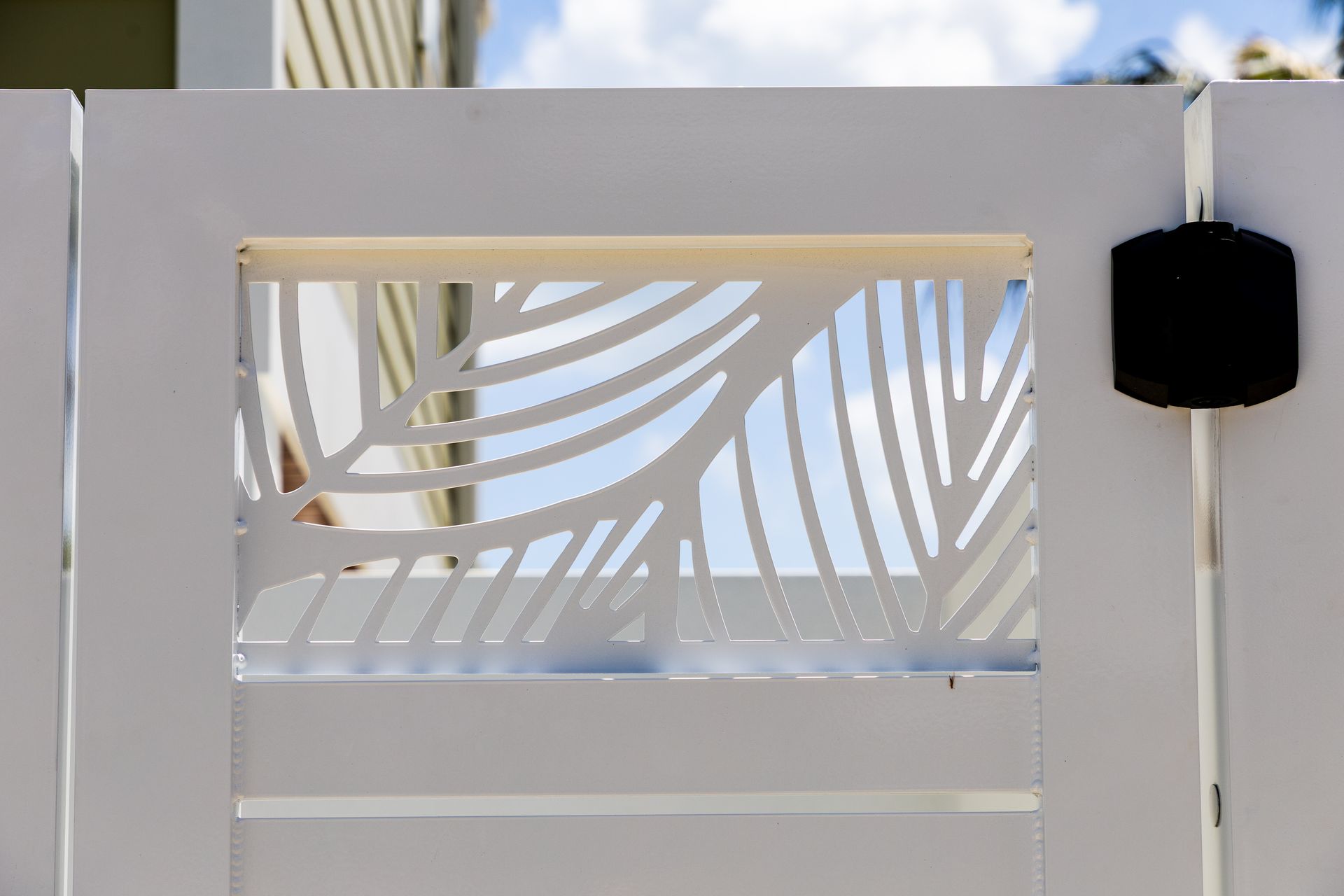
Aluminum can also be fabricated into a wide range of screening styles, including:
- louvers;
- vertical or horizontal slats;
- perforated panels;
- framed sections; and
- project-specific configurations.
Powder-coated finishes can also be used to coordinate the screen with other exterior architectural elements.
Sarasota’s Coastal Environment Is an Important Consideration
Exterior materials in Sarasota can face challenging environmental conditions, particularly on properties closer to the Gulf.
Salt-laden air and humidity can cause more aggressive exposure conditions, although the severity varies depending on factors such as:
- proximity to the coast;
- prevailing wind;
- humidity;
- shelter from surrounding structures; and
- the immediate site environment.
These conditions make appropriate material selection, finishes, and installation details especially important for exterior fabricated components.
An aluminum equipment screen should not, however, be treated as corrosion protection for the HVAC unit itself.
The screen’s primary role is to provide architectural concealment while accommodating the functional requirements of the equipment.
HVAC Screens Should Work With the Building, Not Against It
Custom fabrication also makes it possible to treat mechanical screening as part of the architecture rather than as a separate visual element.
The screen can be designed around:
- building lines;
- existing railings or gates;
- exterior finishes;
- surrounding landscaping;
- panel proportions;
- sightlines; and
- the amount of concealment required.
This can be especially valuable on commercial properties where mechanical areas may be visible from entrances, parking areas, sidewalks, or tenant spaces.
For residential properties, the same approach may help HVAC equipment blend more naturally into side yards, patios, pool areas, or other visible spaces.
What Should Sarasota Property Owners Consider Before Installing an HVAC Screen?
Before choosing an equipment screen, focus on four things.
Airflow:
The screen must not interfere with the airflow required by the HVAC system.
Clearance:
Manufacturer requirements and surrounding site conditions should guide how close the screen can be placed.
Access:
Technicians should still be able to inspect, maintain, repair, and eventually replace the equipment.
Design:
The screen should fit both the equipment and the architecture of the property.
When those factors are considered together, equipment screening becomes more than a cosmetic improvement. It becomes a functional architectural element designed around the way the property actually works.
Custom Aluminum HVAC Equipment Screens in Sarasota
A good HVAC equipment screen should conceal mechanical equipment without treating it like something that can simply be enclosed.
The most effective designs respond to the equipment, manufacturer requirements, site configuration, maintenance needs, and surrounding architecture.
Freedom Aluminum fabricates custom aluminum equipment screens for Sarasota properties, allowing the screen to be designed around the specific application rather than relying on a one-size-fits-all enclosure.
Frequently Asked Questions
Can you put a screen around an outdoor AC unit?
Yes, but the screen must maintain the airflow, clearance, and service access required for the specific HVAC equipment.
How close can an HVAC screen be to an AC unit?
There is no universal distance. Required clearances vary by manufacturer, equipment model, installation configuration, and the location of nearby structures. The manufacturer’s requirements should guide the design.
Can an HVAC screen reduce efficiency?
A poorly designed screen that restricts airflow can affect how effectively the outdoor unit rejects heat. Proper spacing and openness are therefore important.
Why use aluminum for HVAC equipment screens?
Aluminum provides design flexibility, natural corrosion resistance, and the ability to create project-specific screening using louvers, slats, perforated panels, or other configurations.
Should HVAC equipment screens have access panels?
In many applications, access gates, removable panels, or other service openings can make maintenance and repairs easier.
Can HVAC screens be used on commercial properties?
Yes. Equipment screens can be used around mechanical systems on offices, retail properties, multifamily developments, parking areas, and other commercial sites where HVAC equipment is visible.